
Wallet quick start
You need native tokens to pay the gas for your transactions, and a wallet for the faucet to send them to. peaq is a Substrate chain with EVM support built in, so either address format works:- EVM H160 address:
0x48c9774c88736F7C169d2598278876727AfD1476 - Substrate SS58 address:
5DwB5a6XBgTViF6orQuUHBhZNXh2Eyu7whLoz6ykt1gZdLcZ
Create EVM Wallet
- Go to the MetaMask wallet extension page
- Add extension
- Create a new wallet
- Add password for login on your connected device
- Write down and store the mnemonic phrase
- Complete reading the wallet on-boarding prompts
Add peaq to Wallet
peaq is not in MetaMask by default, so add it as a custom network.- Open MetaMask and go to the network selector page
- Click on
Add a custom network - Enter the values below. They come from Connecting to peaq; add other networks the same way with that page’s values.
- Click save and change to that network
- PEAQ/AGUNG appears as native token
Create Substrate Wallet
- Go to the polkadot.js wallet extension page
- Download for your browser
- Click on the plus to create a new account
- Safely store the mnemonic phrase, and continue
- Allow for use on any chain
- Create a name and password
Substrate Wallet
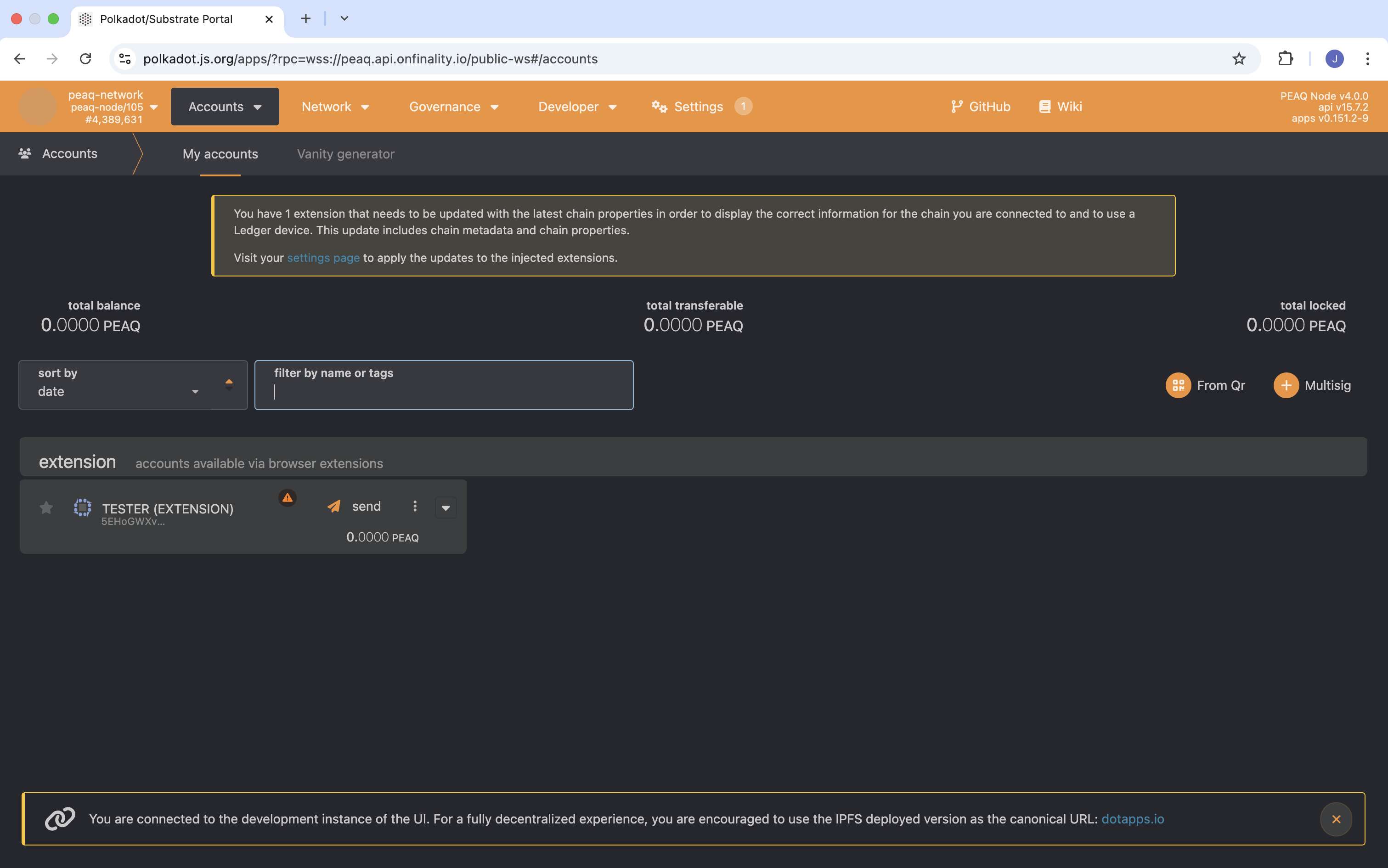
If you use a Substrate wallet, open the peaq accounts page or the agung accounts page. The extension pane at the top of the page lists the connected accounts. If your wallet does not show up, make sure the extension is installed and a wallet is created, then connect it manually:- Go to your extensions and open the polkadot.js extension
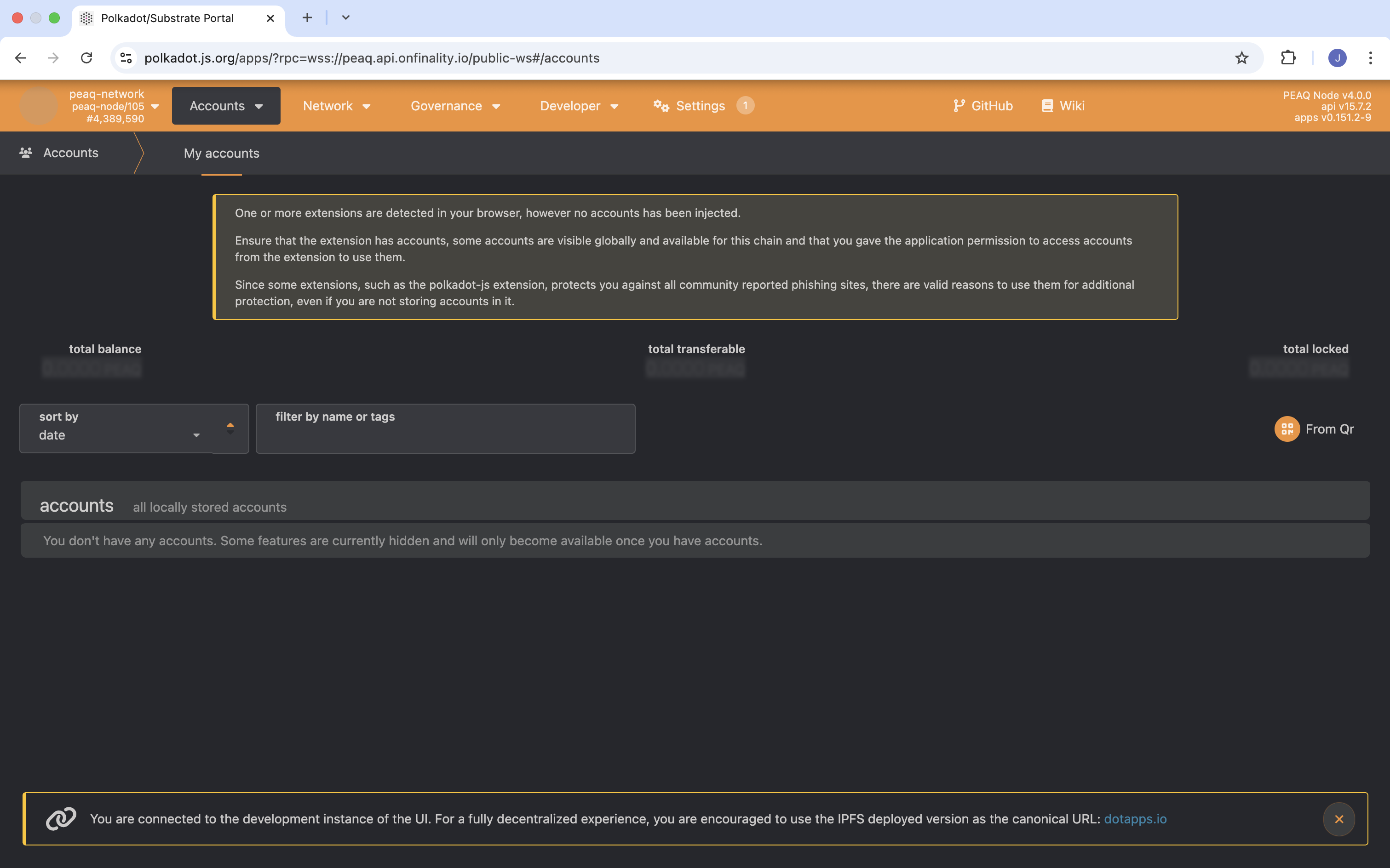
- Click on the “Connect Accounts” tab on the top of the extension
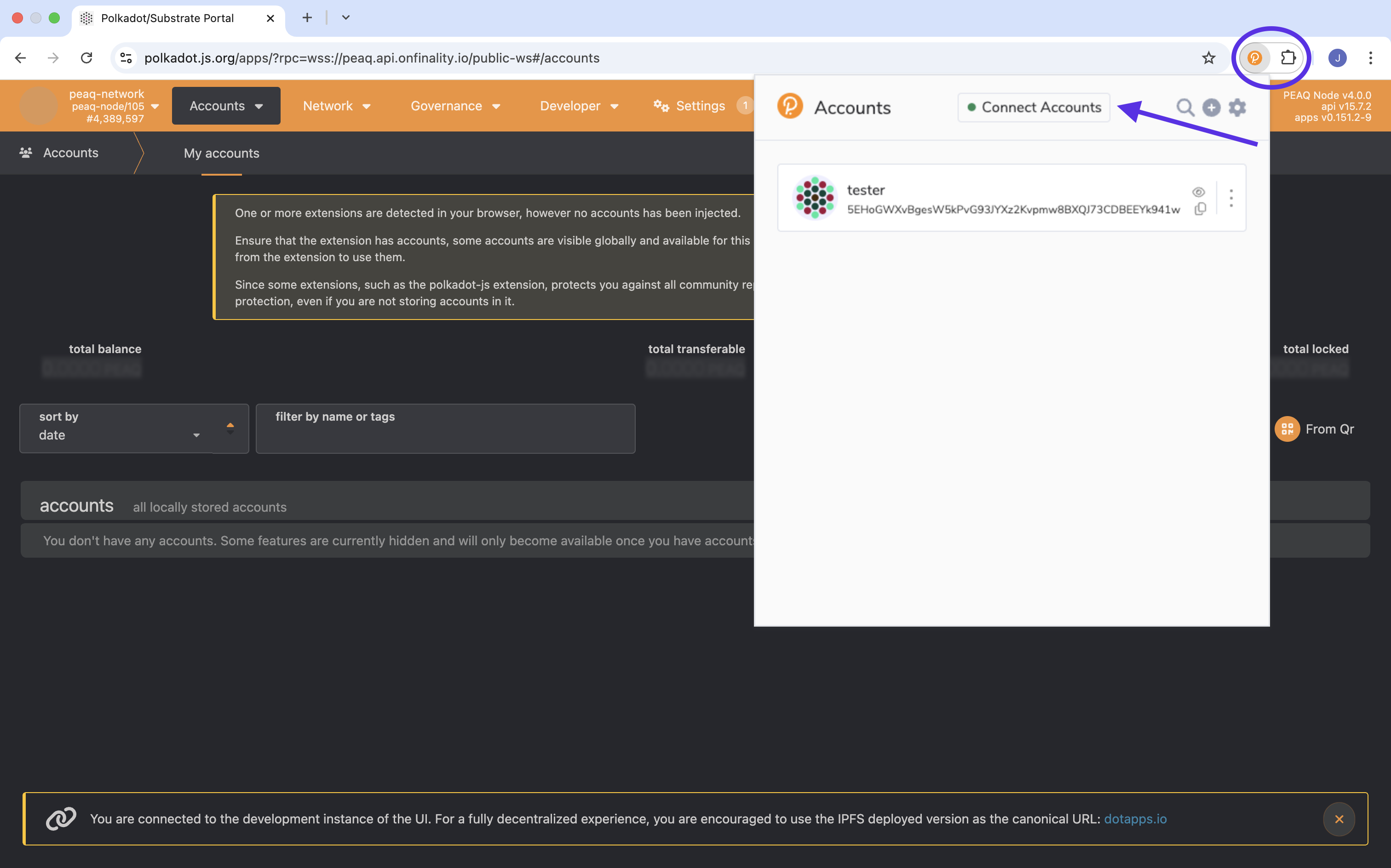
- Select which wallets should appear in the pane on the accounts page.
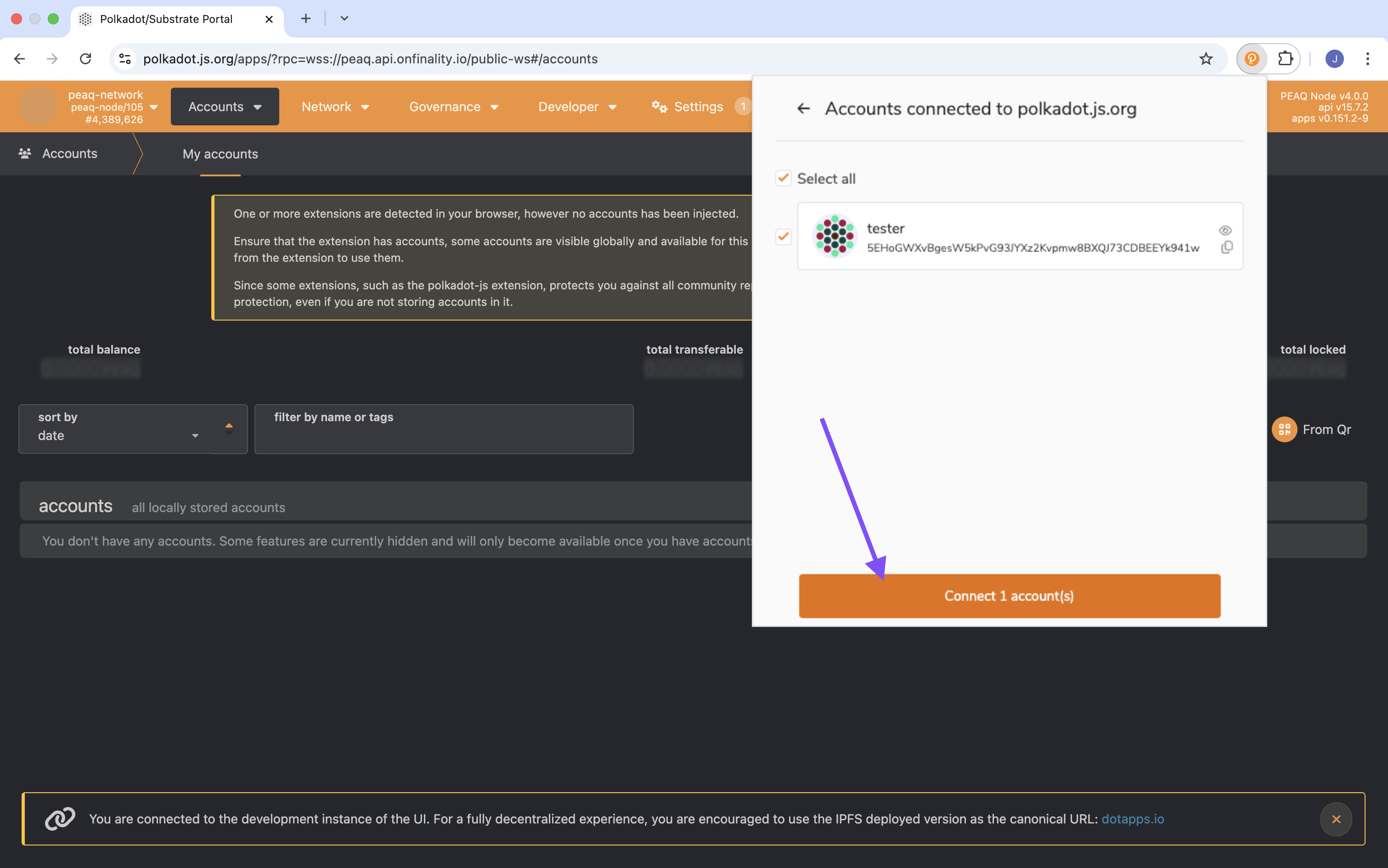
- Click connect and the wallets appear.