

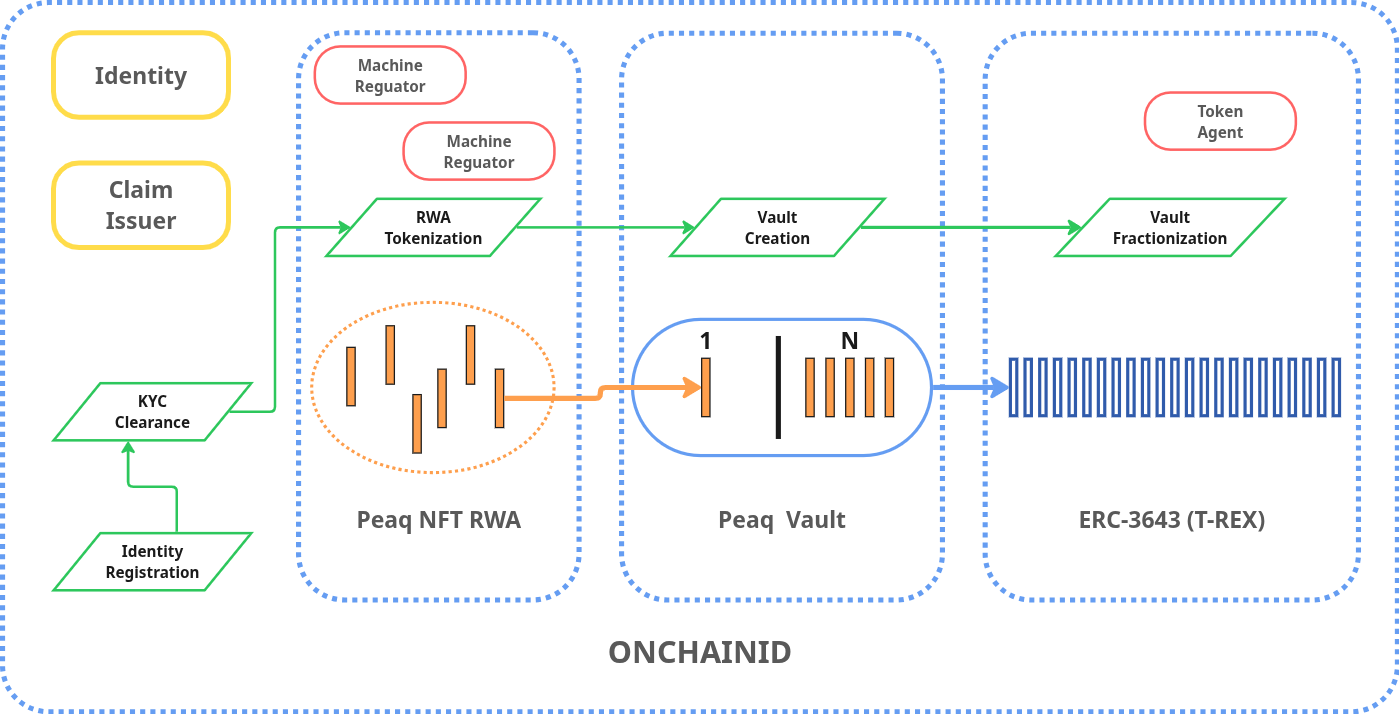
- ONCHAINID - A decentralized identity protocol that links wallet addresses to verified identities, enabling Know-Your-Customer (KYC) compliance on-chain.
- T-REX (ERC-3643) - The Token for Regulated EXchanges standard, which provides a security token framework with built-in compliance controls.
- ERC-721 NFTs - Non-fungible tokens that represent unique real-world assets (MachineNFT) and contractual agreements (ContractNFT).
- Register physical machines as on-chain NFTs with embedded DID documents
- Package those assets into vaults
- Fractionalize ownership into security tokens that can be sold to investors
- Distribute yield from machine operations to token holders, who claim their share
@peaq-network/rwa.
Contract Addresses
Use agung to build and test. On peaq mainnet the contracts are deployed, but no trusted Claim Issuers or Machine Regulators are configured yet, so KYC-gated calls (machine registration, contract creation and signing, adding Machine Issuers, vault minting and transfers) revert there.
rwa_sdk.getAddresses() under different key names. infoDesk and initialContractNft are not in the SDK address book; pass them yourself (for example infoDesk in vault.createVault).
peaq
agung
Next Steps
- Learn more about the modules - Detailed documentation for each module the RWA Framework is composed of.
- Roles & Responsibilities - Detailed documentation for each participant role
- SDK Reference - Complete API documentation with code examples